Energy Research Accelerator Hosts Parliamentary Roundtables for Energy Security Week
As part of Energy Security and Green Infrastructure Week in …
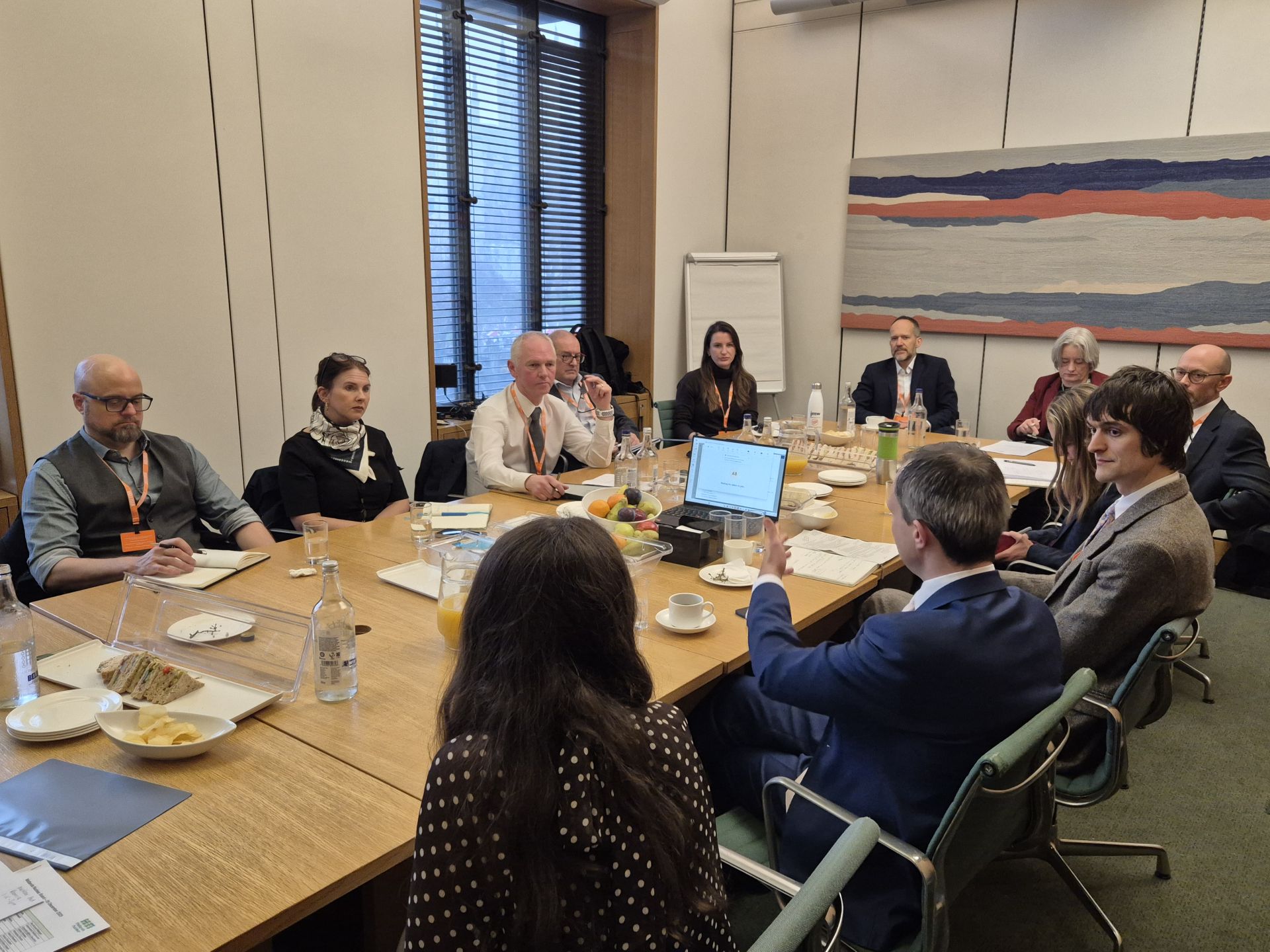
As part of Energy Security and Green Infrastructure Week in Parliament, the Energy Research Accelerator (ERA) convened a series of high-level roundtables bringing together MPs, industry leaders, academics, and sector experts to examine the energy challenges shaping the UK’s security, resilience, and net zero transition.
Hosted in Westminster, the three sessions focused on Energy for Defence and Critical Infrastructure, Energy Storage, and New Nuclear, exploring how energy policy, infrastructure delivery, skills, and innovation must evolve to meet growing geopolitical, economic, and system pressures.
Energy for Defence and Critical Infrastructure
Chaired by Professor Phil Longhurst of Cranfield University, the roundtable on Energy for Defence and Critical Infrastructure examined the increasingly strategic role of energy in national defence and resilience.
Participants highlighted that energy can no longer be treated as a background utility. Secure power generation, storage, and distribution are now fundamental to operational readiness, homeland defence, and disaster response. The discussion underscored vulnerabilities arising from ageing grid infrastructure, grid capacity constraints, and the rapid electrification and digitalisation of defence assets.
There was strong consensus on the need for clearer definitions of critical infrastructure, greater prioritisation of defence assets within national recovery planning, and wider deployment of decentralised, secure-by-design energy systems. Defence was also recognised as a potential anchor customer for emerging technologies, helping to de-risk innovation and accelerate wider civilian adoption.
Energy Storage
The Energy Storage roundtable, chaired by Dr Emma Guthrie, Chief Executive of the Hydrogen Energy Association, focused on the critical role storage must play in delivering a secure, affordable, and fully decarbonised energy system.
While renewable generation capacity continues to expand, participants emphasised that the defining challenge of the energy transition is now system management rather than generation alone. Energy storage was consistently identified as the cornerstone of future energy security, enabling flexibility, resilience, and affordability in a renewables-led system.
Discussions highlighted the need for a diverse portfolio of storage technologies operating across short, medium, and long durations — from batteries providing fast-response grid services, to long-duration and seasonal storage such as hydrogen. Key barriers included grid access, planning, and uncertainty around market design and revenue mechanisms, with demonstrator projects and clearer, bankable policy frameworks seen as essential to unlocking investment at scale.
New Nuclear
The New Nuclear roundtable, chaired by Chris Moore, examined the skills, workforce, and industrial capabilities required to deliver the UK’s nuclear ambitions.
Participants highlighted a significant and growing skills gap across both civil and defence nuclear, driven by historic underinvestment, stop–start project pipelines, and long-term workforce uncertainty. Discussions focused on the need for a credible, sequenced nuclear build programme to stabilise employment, support apprenticeships, and enable mid-career transitions from adjacent sectors.
Strong emphasis was placed on regional collaboration, diversity and inclusion, early engagement with schools, and closer integration between academia and industry to ensure training pathways align with modern delivery needs. Nuclear energy was consistently framed as a central pillar of national energy security, offering system resilience, price stability, and geopolitical benefits alongside decarbonisation.
Looking Ahead
Across all three sessions, a clear message emerged: energy security, national resilience, and net zero delivery are inseparable. Whether supporting defence and critical infrastructure, enabling a flexible renewables-led system, or delivering new nuclear capacity, participants agreed that coordinated policy, long-term investment certainty, and whole-system planning are essential.
The Energy Research Accelerator is proud to have convened these discussions and will continue working with government, industry, and academia to translate insight into action at pace and at scale.