ERA event explores AI-driven “digital brains” and cross-disciplinary leadership for Net Zero

The Energy Research Accelerator (ERA) welcomed researchers and innovators to …
Published On: May 14, 2026
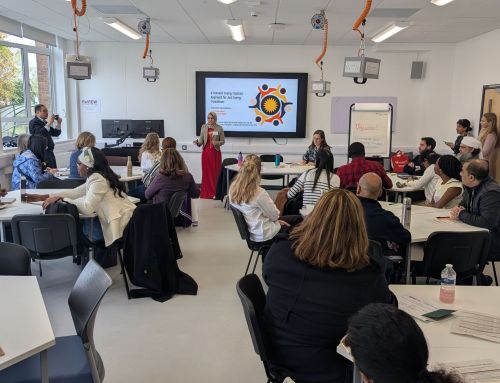
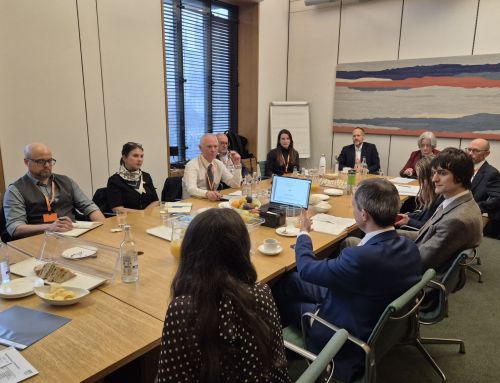
image shows researchers talking about AI Digital Brains

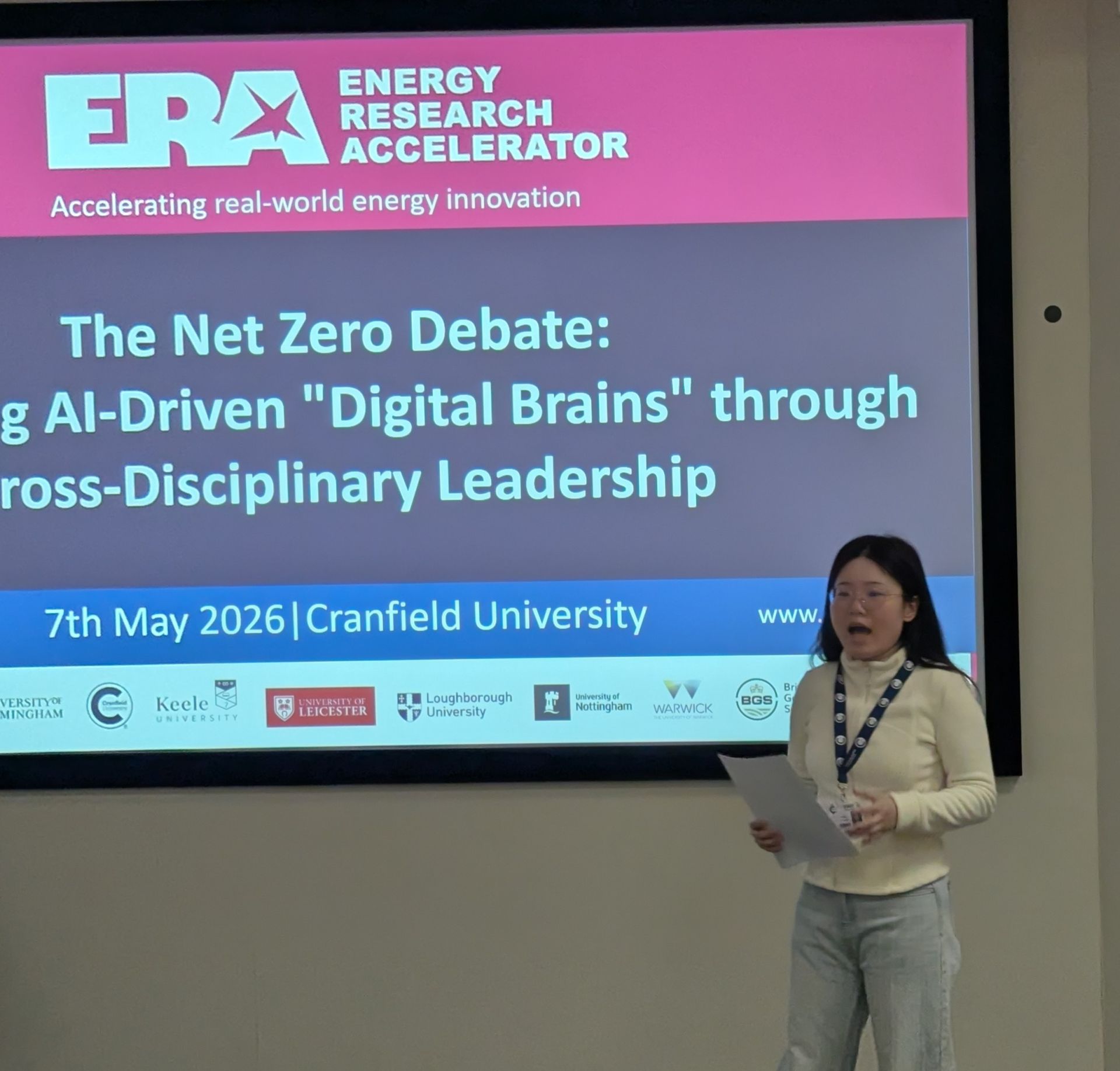
The Energy Research Accelerator (ERA) welcomed researchers and innovators to Cranfield University recently for The Net Zero Debate: Advancing AI-driven “Digital Brains” through cross-disciplinary leadership.

Funded through the ERA C-DICE Community Fund, the event supported Early Career Researchers (ECRs) to explore how artificial intelligence and cross-sector collaboration can help address the challenges of achieving Net Zero.

The event highlighted the growing need to integrate AI-driven “Digital Brains” with energy systems research, while also recognising the technical, economic and policy challenges involved in deploying AI responsibly across the sector.

Delegates took part in a full programme of expert talks, technical showcases and interactive debate activities designed to strengthen interdisciplinary understanding and collaboration.

The day included six short specialist presentations covering hydrogen aerospace applications, additive manufacturing, hydrogen economics, chemical engineering, thermochemical processes and energy systems.

Attendees also toured Cranfield University’s ocean energy and hydrogen generation facilities, including demonstrations of digital twin technologies being used to explore ocean-bound solar power solutions.

A key feature of the event was the interactive “Consensus Debate”, where participants worked together to identify barriers to AI adoption in energy research and co-create practical, bankable Net Zero roadmaps.

The event was organised by Dr Danlei Yang and supported by Cranfield University.

Dr Neil Radford, Skills Manager for the Energy Research Accelerator (ERA), said:

“The event allowed delegates from across energy research disciplines to engage with the possibilities conveyed by AI but also to expose and discuss the challenges and caution required for its use. It was an excellent day, congratulations to the organiser, Dr Danlei Yang and her team.”

The ERA C-DICE Community Fund enables Early Career Researchers to develop and deliver activities that encourage knowledge exchange, collaboration and professional development across the wider research community.