Hydrogen Storage – HORN network showcases the EMStor and HyScale programmes
The Energy Research Accelerator (ERA) and HyDEX’s latest Hydrogen Off-Road …
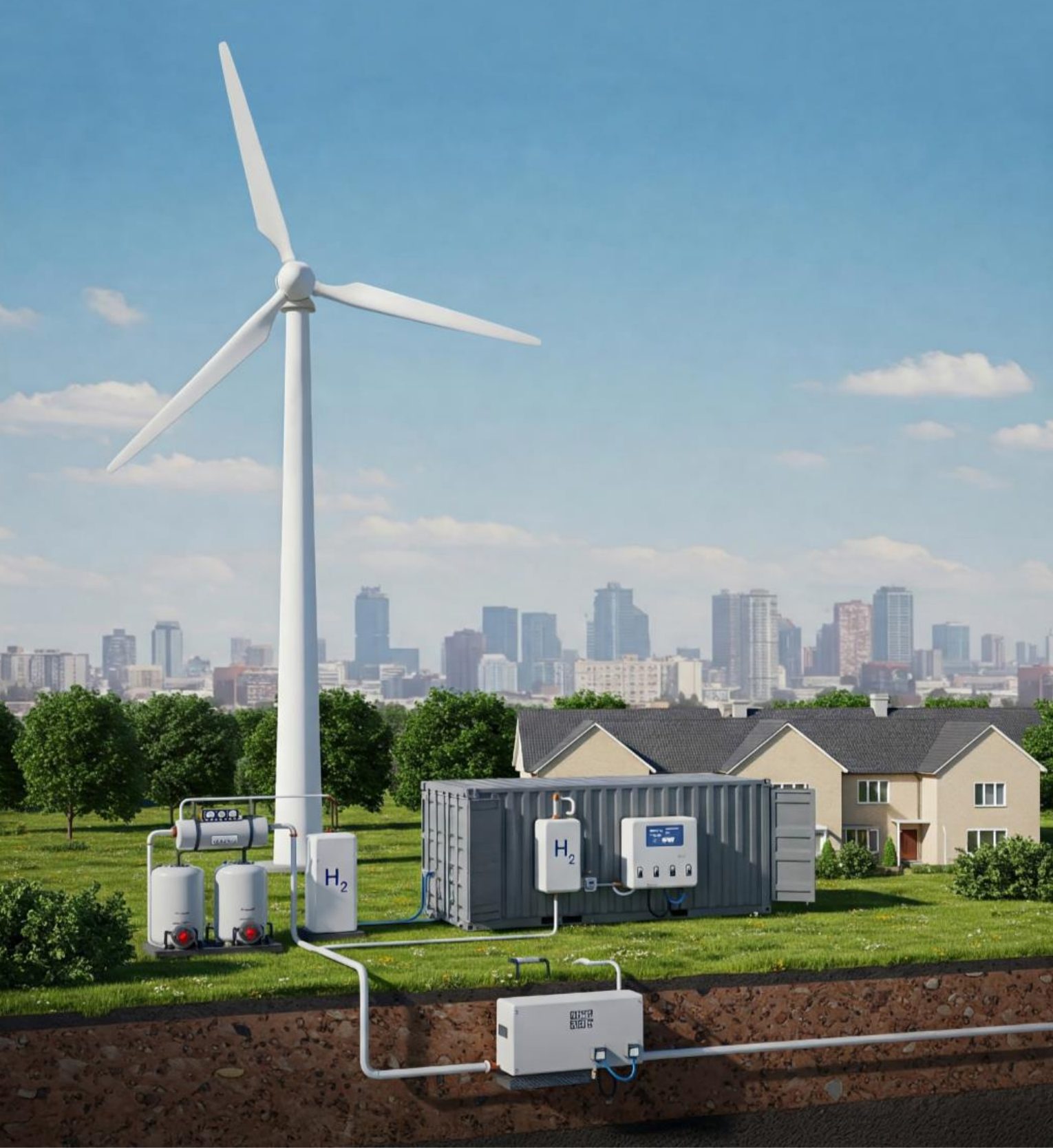
The Energy Research Accelerator (ERA) and HyDEX’s latest Hydrogen Off-Road Network (HORN) event brought together over 160 attendees from industry, academia, and the public sector to explore the future of hydrogen storage.
The online session highlighted two pioneering Strategic Innovation Fund projects—EMStor and HyScale —both offering complementary solutions to one of the UK’s biggest clean energy challenges: where and how to store hydrogen when it’s not immediately needed.
You can also download a video of the event
The following is a summary of the main points from each presentation:
- EMStor – Unlocking Underground Hydrogen Storage in the East Midlands
Presented by: Andy Lewis (Cadent), Prof Katriona Edlmann (University of Edinburgh), and Marie Dransfield (Star Energy)
The East Midlands is home to 20 major industrial companies across 70 sites, producing 75% of the region’s industrial and power-related CO₂ emissions. Switching these industries from natural gas to low-carbon hydrogen could cut 1.9 million tonnes of CO₂ annually—the equivalent of decarbonising 860,000 homes.
The EMStor project, led by Cadent in collaboration with the British Geological Survey, the University of Edinburgh, and Star Energy, is developing large-scale hydrogen storage solutions for the region. Key motivations include:
- Meeting the region’s potential to produce 650 MW of hydrogen by 2050.
- Overcoming isolation from salt cavern storage being developed along the UK coastline.
Key Alpha phase outcomes:
- Technical feasibility: Depleted hydrocarbon fields emerged as the most suitable geological storage option. Lab tests showed negligible reactivity between hydrogen and rock samples, with several promising saline aquifers identified as alternatives.
- Public perception: Early surveys suggest communities see climate and economic benefits from hydrogen storage, though some local safety concerns persist.
- Regulatory hurdles: Current legislation does not yet allow hydrogen storage in groundwater reservoirs, representing a major “show-stopper” until addressed.
- Business case: Co-locating storage with production could cut hydrogen costs by up to 18% in optimal scenarios.
The project’s next step is to create a full development roadmap towards a demonstrator facility and work with government to clarify the permitting pathway.
- HyScale – Harnessing Liquid Organic Hydrogen Carriers (LOHCs)
Presented by: Josephine Tunney (SGN), Christian Schwarz (Framatome), Aditya Doshi (Blue Abundance), Jonathan Long (ERM), and Michael Geisselbrecht (Forschungszentrum Jülich, FZJ)
In regions without suitable geology for underground storage, Liquid Organic Hydrogen Carriers offer a safe, versatile alternative. LOHCs are organic liquids that absorb and release hydrogen through catalytic reactions, remaining stable at room temperature and pressure. They can be stored in existing tanks and transported through repurposed infrastructure.
Why LOHCs matter:
- Enable long-duration and seasonal storage at ambient conditions.
- Compatible with existing infrastructure, avoiding the need for high-pressure or cryogenic systems.
- Flexible withdrawal rates and no self-discharge.
Key Alpha phase findings:
- System benefits: LOHC storage enables flexible electrolyser operation, reduces renewable curtailment, and can cut system costs by up to 15% while delivering 13% greater environmental benefits.
- Technical flexibility: Works with multiple electrolyser types (PEM, alkaline, HTSE) and can integrate with power-to-gas systems.
- Operational savings: HTSE integration can reduce heating and cooling costs by up to 80%.
- Site readiness: Potential demonstration sites identified, with planning permission already secured for one location.
HyScale is now planning a SIF Beta demonstration project—the UK’s first of its kind—to validate LOHC technology at scale and strengthen the case for its role in the future hydrogen economy.
The need for Hydrogen Storage
Both EMStor and HyScale address the UK’s pressing need for hydrogen storage—whether through repurposed underground reservoirs in the East Midlands or advanced liquid carriers for regions without suitable geology.
As presenters at the event emphasised, solving the technical, regulatory, and commercial challenges now will be key to enabling hydrogen to decarbonise power, heat, transport, and industry, helping secure jobs, investment, and a just transition to net zero by 2050.
Want more information?
For more information about this event, email Nick King at the Energy Research Accelerator – Nick.King@era.ac.uk